By Elita Karma. Posted on August 23, 2010
By Elita of Blacktating.com for the Best for Babes Foundation ©2010
Have boobs will sag? A new study revealed that as many as half of all women age 18-25 don’t plan on breastfeeding because they don’t want their breasts to sag. Numerous studies have already shown it’s actually pregnancy that causes saggy boobs, not nursing. How can we spread the word and let young women know their breasts (and vanity) will still be in tact if they choose to nurse? And that even if breastfeeding did ruin breasts it would still be worth it?
Have you ever had an embarrassing breastfeeding mishap? This week actress and model Ali Landry revealed how hers cost her thousands of dollars. While pumping gas, Ali’s baby began to fuss so she got in the car to nurse her. Her husband assumed she was finished pumping, got in the car and drove off, taking the gas hose with him. Oops!
In the mood for a real tear jerker? Check out this wonderful story of a mom whose preemie was suffering from necrotizing entercolitis and whose life was literally saved by breast milk. The donor mom had already lost her own preemie to the same disease, but one family’s tragedy was another family’s blessing. Although the circumstances are tragic, we’re so pleased to see more parents are insisting on breast milk for their premature babies.
We’ve never liked those formula-filled diaper bags you get upon discharge from the hospital, and it looks like some hospitals in England agree: from now on, moms who are choosing to formula feed will have to bring their own. Now that more hospitals are becoming certified as Baby Friendly, we should see this trend continue.
This week, Muslims around the world celebrated Ramadan, a religious holiday that includes fasting. There has always been the question of whether or not it’s safe for nursing or pregnant moms to fast. Here’s some practical advice from an IBCLC.
In light of more moms being kicked out of or asked to leave public places this week for breastfeeding, it’s even more important that moms feel welcome to nurse in public. LOVE this sign spotted in the Lawrence Public Library. I’ve blogged before about the great signs at the Chicago Children’s Museum. Have you spotted these signs anywhere in your neighborhood?
This week on our Facebook page, we asked you, “I planned to breastfeed for _____, but actually breastfed for_____” and you were overheard saying….
Claire Mogol: I planned to breastfeed for 6 months (exclusively), but actually breastfed for two years and four months… and still going 
Jessica Delancey: One day at a time …. over 3 yrs and counting…
Rebecca Clark: I planned to breastfeed till they were in college but they weaned after age three 
By Elita Karma. Posted on August 16, 2010
By Elita of Blacktating.com for the Best for Babes Foundation ©2010
Remember last week when supermodel Gisele Bundchen said she thought there should be a law requiring moms to breastfeed for 6 months? Well, she got her wish. Indonesia passed a law that will go into effect in October that states that all women who are medically able to breastfeed must do so for at least 6 months. Mothers who decline will face up to a year in jail or a $15,000 fine.
Did you hear the one about the breastfeeding advocate who is formula feeding her baby? That was the secret Attachment Parenting guru Katie Granju revealed on her blog this week. Katie, who lost her eldest child weeks before giving birth, said the stress caused her mature milk to never come in. After trying every technique she knew, she finally came to the realization that her baby girl will have to be on formula. A good reminder that when we see moms bottle feeding in public, we don’t know their stories or how hard they may have tried to breastfeed without success.
I loved this article highlighting two hospitals in the Tampa area who are encouraging and supporting moms with babies in the NICU to breastfeed. Nearly 80% of the moms of these sick babies are nursing. Many have said they would have given up a long time ago if not for the support systems in place at the hospital. Don’t you love it when the hospital gets it right and is promoting breastfeeding instead of booby trapping moms?
The Health Ministry in China investigated claims this week by parents who complained, their baby girls began to develop breasts after drinking a particular brand of infant formula. The ministry says “no link” can be found between the formula and the breast growth.
Dr. Thomas Hale, the go-to doctor for information on medicines and breast milk, has opened his Infant Risk Center. This call-in center is now open to take calls from professionals and parents. There is no charge for this fantastic service that will provide accurate, evidence-based information on medications that are safe during pregnancy and lactation.
And just when you thought it was safe to leave the house with your kids, yet another mom has been kicked out of a public place for breastfeeding her baby. This time it was McDonald’s. The owner of the restaurant has apologized, but I’m getting a little tired of reading this story over and over again.
The National Health Promotion Strategy kicked off their “Well Bermuda” program with a Breastfed Baby Photo Exhibit this week. The Minister of Health in Bermuda said of the exhibit: “Every baby displayed on these walls is a winner simply because they were fortunate enough to be given the greatest of gifts.” I agree!
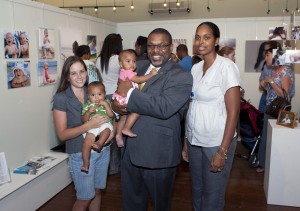
Breastfed Baby Photo Exhibit
By Bettina. Posted on August 1, 2010
First of all, apologies for not getting this post up yesterday, or even this morning; I was at a family reunion, and then one kerfuffle (thanks Amy for the new word) after another came up on my radar, and I didn’t have a chunk of time to concentrate. My kids were out of whack by the time we spilled out of the car, and I have been trying to do a better job of setting clear boundaries between BfB and family time (often unsuccessfully, as I am known to sneak in a text or email reply on a trip to the loo) . . . so here we are, with the first day of World Breastfeeding Week already waning. Anyhoo . . .
 We are really excited about World Breastfeeding Week’s theme this year, which is ”Just 10 steps. The Baby Friendly Way“ As the Motherwear Blog so persuasively explained, only 8% of our nations hospitals follow just six of those steps. Only 3% follow all of them as designated by the Baby Friendly Hospital Initiative. The hospital booby traps are so ginormous that most moms can’t breastfeed exclusively for the first three days, let alone the first 6 months recommended by the American Academy of Pediatrics. We are working hard to raise awareness of the hospital booby traps (the link I reference most often is this one), and have also developed a close relationship with Baby Friendly USA. We will be dedicating a separate blog post to our thoughts on Baby-Friendly, and what we can all do to advance it.
If you are expecting or thinking of starting a family, the single most important thing you can do, long before you go to the hospital or maternity center, give birth at home, or waltz the Ten Steps, is to PREPARE. This means educating yourself so you can make an informed feeding decision and then arming yourself with the tools that will inspire, prepare and empower you to achieve your personal breastfeeding goals.
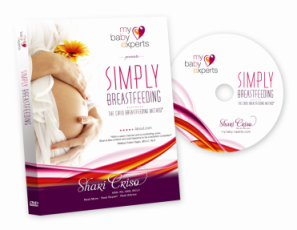
My Baby Experts Simply Breastfeeding DVD is now available FREE online until September 30!
One of the most powerful tools we have come across since starting Best for Babes is the Simply Breastfeeding DVD by Shari Criso. We are thrilled that in honor of World Breastfeeding Week (and months August and September around the world); Shari is making the entire class available online FREE of charge . . . a savings of $29.99 as available on Babies R Us . . . through September 30th! When I first saw Shari’s DVD, I jumped up on the couch, Tom Cruise style, because it is the first full-length class on DVD that I’ve seen that every expecting mother can use to gain confidence, information, and be reassured. We endorsed it because it is a best-in-class tool but also because it is modern, non-judgmental, and very importantly, not boring! Not all breastfeeding classes are teaching evidence-based, unbiased information, in a way that commands interest and attention, and not all moms have access to that information. Shari has a tremendous track record helping clients near a hospital that is a black hole for breastfeeding, and has some jaw-dropping (literally for those babies!) new techniques. (We are hoping to find a researcher and funding to create a study that will examine whether watching the DVD will improve breastfeeding rates; based on anecdotal evidence, we think it does! Shari’s clients have been known to sneak the DVD into the hospital and watch it on their laptops after delivery for help with latches etc.) Here’s where we need your help: We would love to have 10,000 people (expecting moms, dads, grandmas, friends, health professionals) watch the class during the next two months, so Shari can make a case to her sponsors to make the class available free permanently. Please share the free online video with your expecting and new mom friends! We’re interested to hear what you think!
We’ll also be celebrating World Breastfeeding Week with lots of hot info, super style, glam giveaways, and actions you can take! We have a fabulous new celebrity interview coming out, a new line-up of great products that boost your breastfeeding or advocacy style or comfort while helping to grow our cause, and lots of love for our wonderful supporters—from our nearly 7,000 moms on Facebook to the companies and nonprofits that believe in us to all of those who have helped spread the word, donate or help us in some way-you all make it possible for us to do the work we do. This World Breastfeeding Week, we celebrate ♥YOU♥!!
By Elita Karma. Posted on
By Elita of Blacktating.com for the Best for Babes Foundation ©2010
Happy World Breastfeeding Week, everyone! This year’s WBW theme is “Just 10 Steps: Breastfeeding the Baby Friendly Way” and refers to working to eradicate the “booby traps” so many moms face in the hospital. Moms would be more much successful with breastfeeding if hospitals made 10 simple changes, including creating breastfeeding policies, practicing rooming in and not giving bottles and pacifiers to breastfeeding infants. There are also tons of activities going on across the globe to celebrate. Will you be attending an event in your neck of the woods?
In honor of World Breastfeeding Week, the Academy of Breastfeeding Medicine is offering free access to Breastfeeding Medicine, their official peer-reviewed journal for the entire month of August!
No breastfeeding allowed when trying to become a lactation consultant? That’s what a mom in Italy claims she was told by the International Board of Certified Lactation Examiners when she asked to bring her 3-month-old nursling with her while she sat for the IBCLC exam. Reaction seems to be bemusement at the apparent irony, with many people stating the mom should be given extra time, allowed to bring her baby into the exam room or some other accommodation. In America, IBCLE allows moms of exclusively breastfed infants to take extra breaks to feed their baby outside of the exam room, but doesn’t allow them to make up the time. So what do you think IBCLE should have offered this mom? Is this decision hypocritical or do babies not belong in exam halls?
This week a new study revealed that older and overweight moms are more likely to see a delay in their milk coming in. The research shows that first-time moms over the age of 30 and those who are overweight are more at risk of delayed lactogenosis. This happened to me, with my milk coming in around day 5, rather than day 3. Judy at A Mother’s Boutique had the same issue. This is important to note because it could be a potential “booby trap” if moms are told to supplement until their milk comes in. 98% of women have a full milk supply by day 7.
Although it was funny when it happened on The Office, the report that a woman breastfed the wrong baby at a Virginia hospital is nothing to laugh about. When a new mom agreed to have her baby taken to the nursery so she could rest, she never expected a hospital aide would forget to match up the ID bands and bring her baby to another woman to be breastfed. Fortunately, the woman who nursed her baby has tested negative for HIV and other diseases, but the article warns that no one really knows how often these mix-ups happen, as there is no reporting required as long as there is no serious harm. A lower risk of switcheroos is one of the unexpected benefits of “rooming in,” one of the 10 Steps!
This week on our Facebook page, we asked you why you chose to breastfeed your babies. You had some amazing answers, including:
Cassaundra Blythe: The same reason I “chose” to breathe, or love my husband, or eat or become a mother. It’s a normal thing for women to do.
Ashley Poland: The cost and the reduced instances of SIDS. As a first time mom, I was terrified of it.
Carla Richardson Rush: I love them!
Jamie Moore Lowe: It just makes sense. Good for them, good for me!
By Elita Karma. Posted on July 19, 2010
By Elita of Blacktating.com; for the Best for Babes Foundation ©2010
This was an amazing week for Best for Babes, as we found out Tuesday that we won a $20,000 donation from Chase, thanks to all of you who voted in the contest on Facebook! We are so grateful and want to thank you for all you’ve done for the Mother of All Causes.
Thanks to Tanya at the Motherwear Blog for uncovering even more good news in the Health Care Reform bill related to breastfeeding. Apparently buried in those new regulations is the requirement that insurance reimburse for preventive health services, including breastfeeding education & evaluations, both in hospital and outpatient settings. No one is still sure when this all goes into effect or what exactly it means for moms, but we’ll be sure to keep you posted!
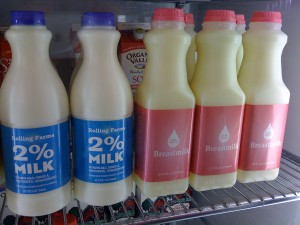
Photo courtesy of The Faster Times
Here’s to the adoptive parents who educated their pediatrician on the importance of human milk and the availability of donor milk through milk banks. Dr. Jack Maypole’s excellent article highlights how he was able to write a prescription for breast milk for the family, the history, availability and safety of human milk. The article points out that we only have a handful of milk banks in the US, while Brazil has about 180. We’re getting better, though: the Mother’s Milk Bank of New England opened this week in Massachusetts.
Whoever said one person can’t make a difference never met Amanda Mack! After receiving a “breastfeeding support bag” from a formula company after the birth of her second baby, Amanda decided to contact all of the companies she knew that truly supported nursing moms and asked them to donate products for a real support bag to hand out at her local hospital. With that, the Laramie Breastfeeding Bag project was born! Amanda has been able to provide 125 bags so far. Interested in creating a bag for your local hospital? Check out the Laramie Breastfeeding Bag project’s Facebook page for details how.
As a mom who worked and pumped, I could so relate to the article This Sucks: Breast Pumping at Work. This is the perfect example of how far we still have to come in this country and why family-friendly policies like paid leave, babies at work programs, on-site day care and protection for moms who are pumping at work are so important.
I’d also like to shine the Blog Spotlight on Anne of Dou-la-la this week for her insightful post on the difference between “can’t” and “won’t” when it comes to breastfeeding. We wish that every mom had the support to meet her breastfeeding goals, but we also wish that moms who didn’t choose to breastfeed felt comfortable enough to be honest about their decision, without worrying they’d be judged for their decisions.
And finally, now that summer is here, we want to remind you of the importance of soaking up some sun so you can make adequate levels of Vitamin D for both yourself and your nursling! It’s particularly important to make sure your Vitamin D levels are adequate if you are a woman of color or live in a northern climate where you go months without a lot of sunshine.
By Elita Karma. Posted on July 5, 2010
By Elita of Blacktating.com; for the Best for Babes Foundation ©2010
It’s officially summer and for a lot of folks, especially the rich and famous, that means family vacations. I’ve always loved these great tips for breastfeeding on a plane but in today’s times, you should also be aware of the TSA’s policies on traveling with breast milk. Unfortunately, you never know what will happen once you arrive at the airport as actress Jenna Eflman found out this week when TSA decided to “vapor test” her bottle of breast milk. Don’t you feel safer now?
There was a great discussion on my blog recently about the variations in care for breastfed newborn babies with jaundice. Some people had pediatricians who insisted on supplementing with formula, others were told to stop nursing, while some were told to nurse more frequently. Thankfully, the Academy of Breastfeeding Medicine has issued some updated, common sense guidelines for managing jaundice in a breastfed baby, which include initiating breastfeeding within the first hour of life and encouraging exclusive breastfeeding. Jaundice is incredibly common, which is why we have an extensive page on it.
Booby Trap Alert! As we told you this week, a new study done at the University of Florida on tongue tie revealed what many lactation consultants already knew: clipping a tongue tie could help many more babies to breastfeed successfully. Not only does there appear to be the sentiment amongst doctors that frenotomies are unnecessary, but unfortunately not all doctors are even allowed to do the procedure. See our post for tips on what you can do if you’re faced with this Booby Trap.
We know that most moms who stop breastfeeding say they did so because they weren’t “making enough milk.” Whether it was true or imagined, the concern is normal and valid. Although the percentage of moms who don’t make enough milk is small, if we think of it in terms of numbers, it is something that will affect many moms. Besides herbs and a drug called Reglan that can have some scary side effects, there aren’t really any legal options for women who need to increase their milk supply in the US. Dr. Thomas Hale and IBCLC Dr. Kathleen Kendall-Tackett would like to hear from moms who have used drugs to increase their milk supply, to help determine their efficacy and safety. If you’ve used Reglan or Domperidone, please take about 15 minutes to complete their survey.
Things were very busy on our Facebook page this week. First, because of you and your votes, we made it into the Top 200 charities eligible to win $20,000 from the Chase Community Giving campaign! We are also creating our own Babe Blogger Roll, so if you have a blog, please sign up and you’ll always have the inside scoop on what Best for Babes is up to.
This week, we asked you, the fans, what feeding norms you grew up with and you were overheard saying…..
Erica Bradley-McCabe I grew up with NO ONE breastfeeding. My first experience was my Swedish SIL breastfeeding my nephew when I was 18 and I decided to breastfeed but was very shy about it with my first.
Damian Dayton I only ever saw breastfeeding. When I got pregnant it was a no brainer that I, too would breastfeed.
Jorie Martin Roubitchek My first experience with formula was when I was babysitting at age 14. Before that, I had seen my mom and aunts breast-feed babies. I remember being really confused about what formula was FOR - but I was too embarrassed to ask the mom why they used that instead because I didn’t want her to be offended.
By Bettina. Posted on June 25, 2010
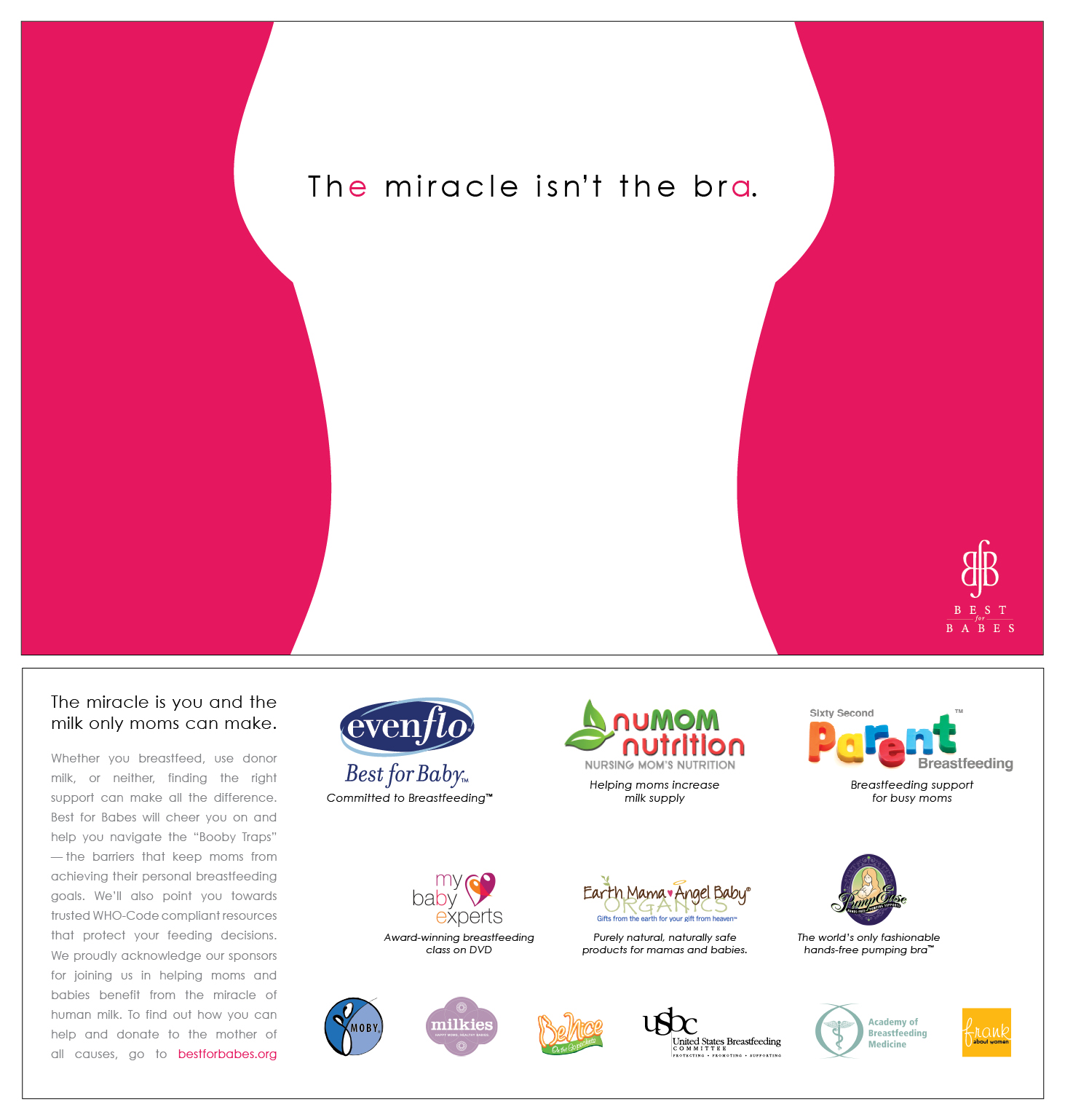
The Best for Babes Foundation is releasing a provocative new breastfeeding ad in a special Pregnancy & Wellness Report to be inserted in USA Today on June 25th in the greater metropolitan areas of Los Angeles, Chicago and New York. The Best for Babes Foundation was established in 2007 to fight the barriers to breastfeeding, and to give breastfeeding a makeover by using mainstream marketing and branding.
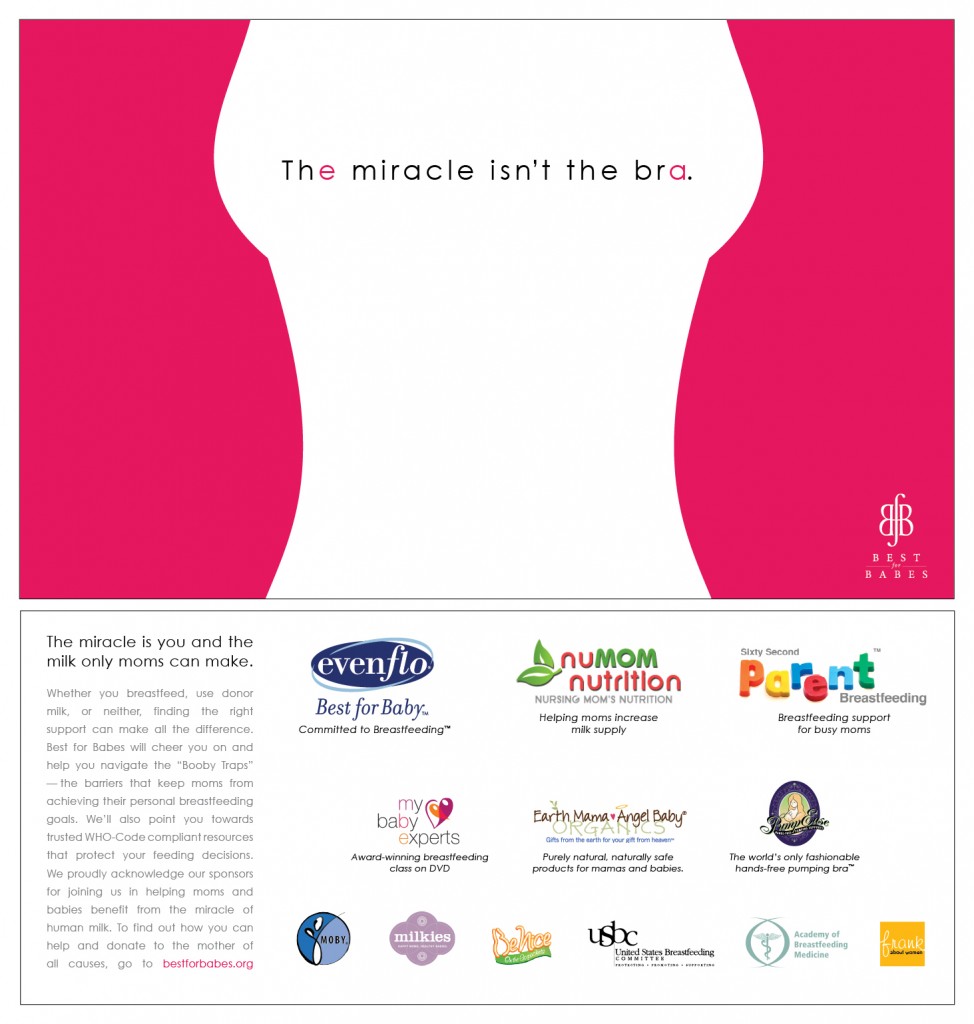 According to the ad, the real miracle isn’t the bra, but mothers, and their ability to make milk for their own and others’ babies. Best for Babes urges parents to get the right support to navigate the “Booby Traps“-the cultural and institutional barriers that keep mothers from making informed feeding decisions and carrying them out. “Most moms want to breastfeed, and don’t realize how they are being undermined by the very institutions that should be helping them. Whether they breastfeed for 2 weeks, 2 months, 2 years or not at all, they deserve to achieve their personal goals. We’re clearing through the information clutter-much of it misleading-and are showing them how to succeed and who they can trust, much like a personal trainer or nutritionist would for someone who wants to get fit,” says Best for Babes Co-Founder Bettina Forbes.
The ad, which is part of a series of arresting visuals, is the first of its kind that aims to raise awareness of the “WHO-Code“-the World Health Organization’s International Code of Marketing of Breastmilk Substitutes and direct parents to hospitals, doctors, employers and resources that are WHO-Code compliant. “Most parents don’t know that the WHO-Code was created to protect parent’s right to make an informed feeding decision at one of the most vulnerable and precious times of their lives-the birth of a child, explains Marsha Walker, RN, IBCLC and a leading expert on WHO-Code compliance. “The aggressive marketing of artificial human milk substitutes has been shown to undermine breastfeeding intention and success, and parents should be careful about where they turn for breastfeeding support.” The ad also acknowledges breastfeeding industry companies such as Evenflo, Numom Nutrition, 60 Second Parent, Pumpease, My Baby Experts, Earth Mama Angel Baby, My Milkies, and Be Nice that are WHO-Code compliant and support Best for Babes’ mission to beat the “Booby Traps” and change the cultural perception of breastfeeding.
Unlike government and state breastfeeding campaigns that have come under fire for using scare tactics, unappealing visuals, or making moms feel judged or guilty, the Best for Babes ad campaign is eye-catching, fun, and designed to cheer on, coach and celebrate moms. “We want moms to have an awesome, empowering breastfeeding experience, ” says Best for Babes Co-Founder Danielle Rigg. “All parents want what’s best for their babies. They deserve support and resources, and those who can’t breastfeed deserve access to the next best substitute: pasteurized, screened human milk from a registered donor milk bank.” The six-figure ad campaign was created pro-bono by Frank About Women, a leading marketing-to-women communications group. It has been positively received for bringing levity and a fresh approach to a persistent public health problem. Best for Babes aims to raise funds to continue the series on billboards and bus stations. The USA Today Pregnancy & Wellness Report, produced by Media Planet, will reach 2.2 million readers in Chicago, Los Angeles, and New York; will be distributed to ob/gyn offices and physicians through the American College of Obstetrics and Gynecology, will be carried in all Destination Maternity stores, distributed at March of Dimes events, will be circulated to 25,000 members of the United States Breastfeeding Committee and all member organizations, and all physician members of the Academy of Breastfeeding Medicine.
________________________________________________________________
The Best for Babes Foundation, a non-profit 501c3, was established in 2007 to give breastfeeding a makeover by using mainstream marketing and branding to inspire, prepare and empower moms, and to raise awareness of and fight the barriers that keep moms from achieving their personal breastfeeding goals, despite their best intentions. The Best for Babes Web site offers breastfeeding inspiration, help for moms who don’t want to breastfeed, a ground-breaking checklist for expectant moms, important information about navigating the “booby traps,” as well as opportunities to become involved and donate.
For more information about the ad or Best for Babes, visit http://www.bestforbabes.org.
By Elita Karma. Posted on June 1, 2010
By Elita of Blacktating.com for the Best for Babes Foundation ©2010
This week started off with a bang when a writer for the Better Homes and Gardens blog posted a piece on the Ten Commandments of Dining with Little Kids. The author, Heather W., who is not a mom, suggested that women who are breastfeeding should “take it to the restroom.” So many were outraged at the idea that a baby should eat in the toilet that within a few hours the page was flooded with comments, telling Heather W. what she could do with her suggestions. Thankfully, the Better Homes and Gardens blog Editor quickly issued an apology and the article was removed. A new article filled with useful tips, written by real moms, replaced it.
Researchers discovered a few years ago that breast milk contains stem cells and now doctors in India have isolated the cells and say they have the ability to differentiate into different cells. Imagine what new stem cell therapies are around the corner!
Are you a Spanish-speaking mom seeking breastfeeding information and support? Join Mother’s Utopia’s weekly breastfeeding Twitter party called Club de Lactancia, every Wednesday at 8 PM. The chat is completely in Spanish and your questions will be answered by an IBCLC. The hash tag for the party is #lactancia.
Want to send a pregnant friend or new mom information on the benefits of the breastfeeding? Our very own Danielle Rigg has created a fantastic list of some lesser known and amazing facts about breast milk and breastfeeding called Mom-Made Wonder Food. The document, which includes citations, can be printed out and kept handy for when you need some extra inspiration or want to dazzle friends and family with the magic of mother’s milk!
Babes, how long after the birth of your baby did you go back on birth control? Most moms I knew waited until their milk supply was well-established before beginning hormonal birth control, but new CDC guidelines suggest that the benefits of beginning birth control immediately outweigh the risks. According to the Academy of Breastfeeding Medicine these new recommendations “ignore basic facts about how breastfeeding works.” The ABM has asked the CDC to change their recommendations, and in the meantime you can follow ABMs protocol for contraception and breastfeeding.
Are you in the market for a new wrap? Best for Babes has teamed up with Moby Wrap to create a baby carrier embroidered with our logo. Proceeds from the sales of the gorgeous wrap will benefit Best for Babes.
On our Facebook fan page this week, we asked for your tips on breastfeeding while babywearing and you were overheard saying:
Usha Tunnell Nurse in a tummy to tummy position, there is no need to move into the cradle position. Untie the wrap, loosen to lower baby to breast lever and retie. Bust out the breast and help baby to latch.
Beth Shupp-George The best tip I got for us well-endowed gals is to pull the breast out over the top of the bra, if possible, rather than unhooking it.
Heather Farley Tips: PRACTICE! I found that if I had the baby’s head on the side of the sling that didn’t go over my shoulder, she would nurse better.
By Elita Karma. Posted on May 24, 2010
By Elita of Blacktating.com for the Best for Babes Foundation ©2010
Have you ever asked yourself, “Who benefits from all of this research conducted on breast milk?” It seems that we are constantly hearing about a new study touting the benefits of breastfeeding and breast milk and as as breastfeeding advocates, we get excited and forward the links to everyone we know. But who sponsors the research and why? We challenged readers not to believe every study they see, and in an excellent piece called Full Disclosure on the Academy of Breastfeeding Medicine’s blog, Dr. Alison Stuebe takes it a step further, examining how and why certain industries sponsor scientific studies.
Has anyone ever asked you, with eyebrow raised, if you were still nursing? Then you’ll love this piece by blogger Maria from Mommy Melee, who is still nursing and still is not ashamed!
Thought formula company marketing couldn’t get any lower? Then may I present you with Enfamil’s new chocolate formula for toddlers. The Atlantic did a great piece on the dangers of this product and is helping to raise awareness about the WHO Code. We’d love it if you could take a moment and post a comment thanking them. Although it’s important to call out the media when they get it wrong, we also have to remember to commend them when they get it right, so we can see more coverage of how dangerous this aggressive formula marketing really is.
Remember when actress Julie Bowen was on The View and they wouldn’t allow her to show a photo of her nursing her twins in the football hold? Well, she was a guest on the George Lopez show this week and he allowed her to show the photograph.
Beautiful!
If you’re a work out of the home mom like me, I know you can relate to some of the quotes from Vanessa Williams in this month’s Working Mother magazine. In the interview, Vanessa says, “There were definitely times I was torn and wished I could have stayed with my kids. There were times that it was very difficult. Just eight weeks after I’d had my second child, I had to go to England to promote my album for ten days. So I dragged my breast pump through airport security. I was so weepy to be leaving my newborn. Those were tough times.” As a mom who has done the same, I feel her pain, but kudos to Vanessa for making breastfeeding a priority!
Can breastfeeding protect babies from spiking fevers after immunizations? A new study shows that exclusively breastfed babies are 54% LESS likely to have a fever after being vaccinated. “When infants are sick and after a vaccination shot, they need not only water, food and a calm environment, but also to be protected,” said the lead author of the study. All things readily provided by breastfeeding.
Finally, Babes, we want to thank you for helping spread the word about Best for Babes on Facebook and getting us to our goal of 2,500 new “Likes,” and $2,500 from our sponsors. This week you were Overheard on Facebook talking about your nursing goals. You told us…
Dawn Davenport Covin with my first it was 1 year until I saw a lady (now friend) nursing an 18 month old and I asked myself why would I stop giving my baby my milk to give her cow’s milk? So, we went on to nurse for 26 months.
Claire Louise Hoyle I said 6 months and done!!! She self-weaned at 18 months and I was gutted!!! See how long we get second time as I have no goal……4 months so far….
Anna Caulkins Swank I never really set goals… always went with an “until they’re done” approach. That ended up being 10 months for Jonny, 20 months for Gracie, 18 months for Levi, and Reagan & Sera are still nursing at 22 months (and not showing any sign of stopping!)
By Elita Karma. Posted on May 17, 2010
By Elita of Blacktating.com for the Best for Babes Foundation ©2010
What a week for breastfeeding, Babes! Nursing moms were the focus of the White House, a TV show, the fashion world and more!
Supermodel Gisele Bundchen made lots of friends in the breastfeeding blogosphere last week when she blogged about the transformative nature of motherhood. Gisele’s words about breastfeeding were so beautiful I have to quote them in full:
Courtesy of Gisele Bundchen's Blog
“I’d also like to talk about a very important issue, which is breastfeeding. It’s essential for the newborn and creates a bond between mother and her child. It’s a unique moment when the body changes to nurture; it’s the Nature’s blessing! Breastfeeding, mainly the first days, poses some challenges, but the reward is sublime. In addition to having all the proteins, fats, and vitamins the baby needs, breastfeeding is an act of love and affection. It would be great if all the mothers could experience the breastfeeding.”
We couldn’t agree more and it’s why we work so hard to support moms so they can meet their breastfeeding goals!
Gisele’s letter inspired our post on mainstream breastfeeding and pregnancy magazine covers-hint, hint, Gisele! The fashion world gave props to nursing mother Rachel Feinstein in the May 2010 issue of American Vogue.
In research news, a study shows what we’ve all believed for some time: breastfed babies know “when to say when,” and bottle-fed babies are often overfed, regardless of whether they’re getting breastmilk or formula. This could explain why breastfed babies are less likely to be obese. A baby who is nursing is learning to self-regulate milk intake and is able to stop when full.
This is another reason we were so excited to see breastfeeding recommendations in the White House Task Force on Childhood Obesity report. Thanks to our board member Marsha Walker for combing through the 124-page document and finding the 70 recommendations specific to breastfeeding, which included hospitals becoming designated as Baby Friendly and educating day care workers on the importance of breastfeeding and how to handle breastmilk.
Ever wondered what’s really going on inside your breast and your baby’s mouth during breastfeeding? A new ultrasound video reveals the true nature of the mechanics of breastfeeding. It turns out it’s NOT all about compression, and these findings could help to diagnose babies with a weaker suck and allow moms to pump until the baby can be brought back to the breast. Although this study’s findings are interesting and may potentially affect how breastfeeding problems are managed, keep in mind that the study was funded by Medela. As a pump and breast shield manufacturer, Medela obviously has a stake and great interest in how these items are used and would benefit financially from their increased use.
So we already know pediatricians don’t learn much about breastfeeding in medical school, but what about the nurses who are taking care of moms post-partum? It turns out they don’t learn much about breastfeeding either. No wonder so many moms feel they weren’t properly supported by nurses after birth!
Did you catch ABC’s “What Would You Do?” segment on nursing in public? The candid camera show wondered what would happen if a manager harassed a breastfeeding mother and asked her to leave a café. Would the patrons stand up for the mom? The show not only tackled whether the race or age of the mom made a difference in how she was treated, but also what would happen if alcohol was involved. Although I liked some parts of the experiment, it quickly devolved into shaming and inaccuracy. Anne at Dou-La-La has an excellent post examining all of these issues. If you caught the show, what did you think?
We’ve been so pleased with all of the new “Likes” our Facebook fan page has received. Remember, for every new “Like,” our fabulous sponsors will donate $1 to the cause! We asked you last week, “I really got the hang of breastfeeding when my baby was ____ old” and you were overheard saying:
Ahmie Polak Yeung about five minutes. Had a fantastic CNM, unmedicated birth, straight to my belly & breast and was nursing before they could get the APGAR
Jenna Conley Stevens About 6 weeks with Gianna, day 1 with Athena….she was my champion nurser! Errr, IS my champion nurser haha.
Roberta Stewart 6 weeks. It didn’t hurt anymore, latch was good, and we’d figured out positions.
Jennifer Sanders I never got hang of it. I thought I did, but she decided I’m doing it wrong and does it her own way. For example, she thinks downward facing dog is a nursing position.




 @BestforBabes
 Best For Babes